
In a highly interconnected digital environment, information security is the cornerstone of our operation. That is why, at URL Pro, we reaffirm our commitment to cyber-resilience through a defense-in-depth strategy: while we strengthen our stance against denial-of-service (DDoS) attacks to guarantee the operational continuity of our processes, we adopt a Zero Trust approach that assumes no connection is secure by default, constantly validating every access to our infrastructure.
At the same time, since the most critical link remains the human factor, we maintain a rigorous phishing-awareness program, equipping our team with the skills needed to identify and neutralize social engineering attempts that seek to compromise the integrity of our customers' data. Welcome to Riesgo Zero, the space where we learn to protect what makes us great.
What denial of service (DoS / DDoS) is
It consists of the intentional saturation of a system, server, or network through a massive flow of artificial traffic or malicious requests. The main goal is to exhaust the system's resources — such as bandwidth, memory, or processing capacity — making legitimate services inaccessible to users, and causing a critical disruption to the organization's operational continuity.
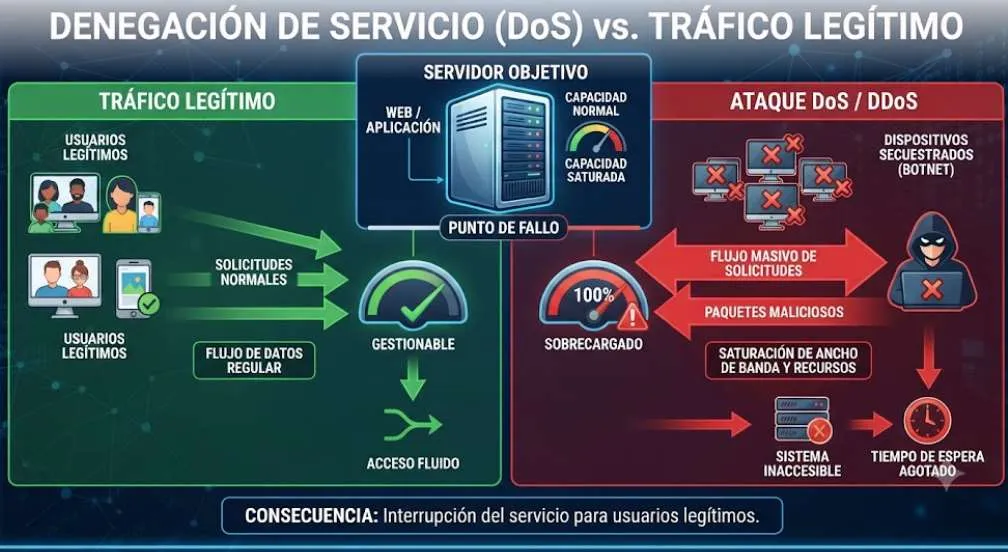
The consequences go beyond a simple technical disruption, directly affecting business continuity and stakeholder trust. Operational unavailability not only generates immediate financial losses from halted critical processes, but also erodes corporate reputation, worsens the customer experience, and can lead to penalties for breaching agreed service level agreements (SLAs).
What Zero Trust is
Zero Trust is a strategic security model based on the principle of "never trust, always verify." Unlike traditional approaches that blindly trust everything inside the network perimeter, this model assumes threats can exist both outside and inside the company, requiring strict, continuous, context-based validation of any user, device, or application attempting to access resources, regardless of location.
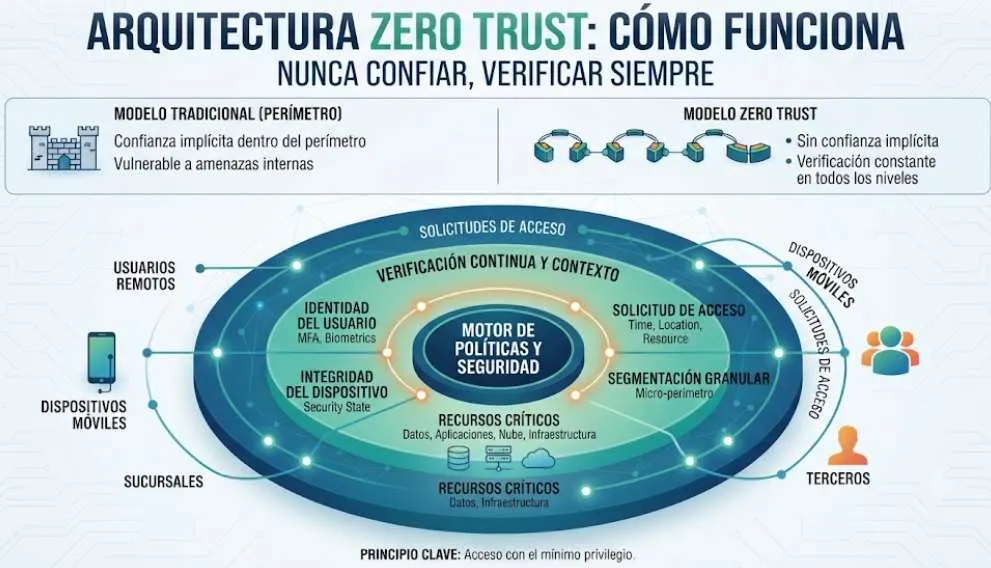
By implementing granular access controls and segmentation, Zero Trust minimizes the risk of lateral movement and protects critical assets, limiting access to only what is necessary: the principle of least privilege.
The evolution of phishing
Phishing has evolved into various specialized tactics, each designed to deceive different types of users.
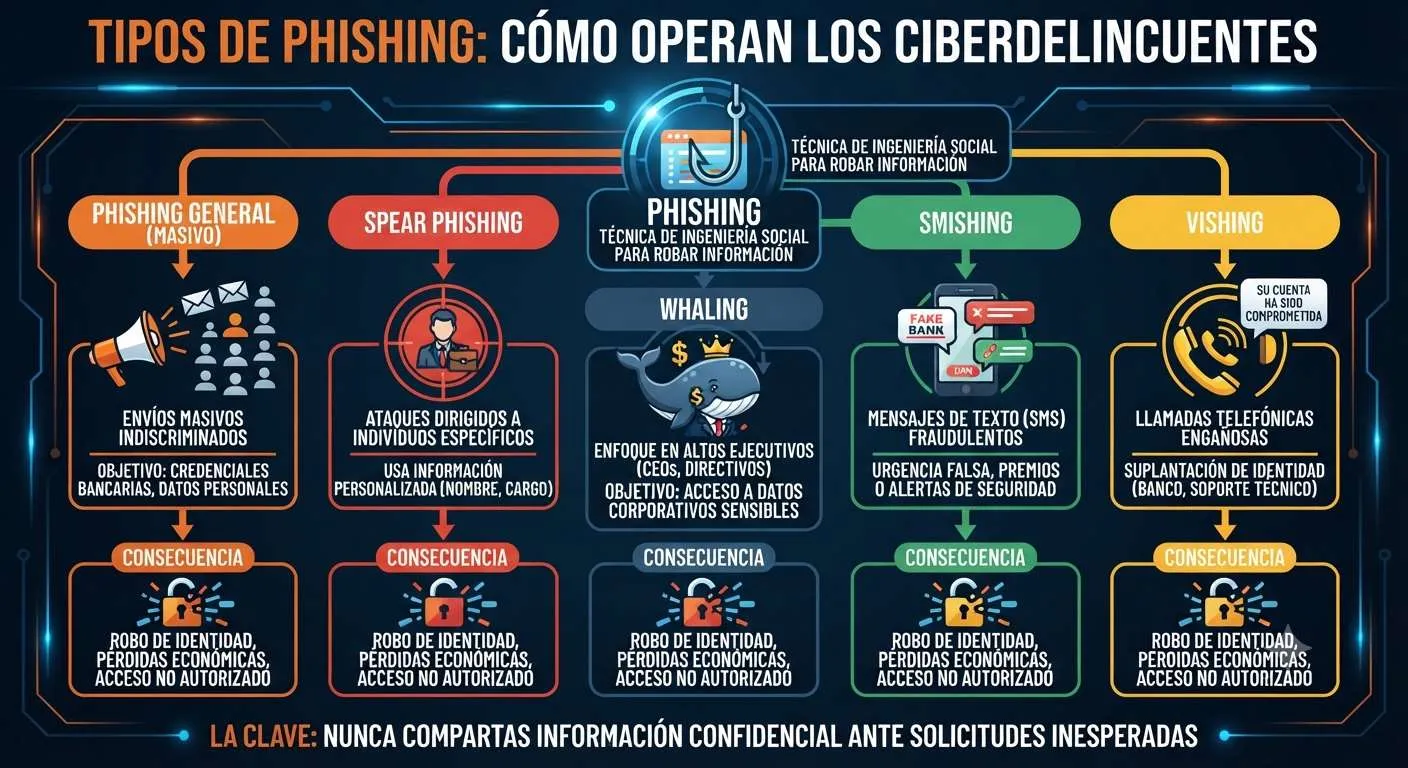
- General (mass) phishing: indiscriminate sends seeking banking credentials or personal data.
- Spear phishing: attacks aimed at specific individuals or departments, using personalized information (name, role).
- Whaling: focused exclusively on senior executives of the organization, seeking confidential information or privileged access.
- Smishing: fraudulent text messages (SMS), exploiting the immediacy and trust in that channel.
- Vishing: deceptive phone calls, impersonating banks or technical support.
The key: never share confidential information in response to unexpected requests.
The human factor remains the most vulnerable link
Even with the most advanced and robust technology solutions for perimeter and network defense, the human factor remains the most vulnerable link in any security chain. The sophistication of protection tools cannot fully shield the company, since users can easily be manipulated through social engineering techniques, like phishing, that aim to exploit human error, trust, or lack of awareness to compromise critical assets.
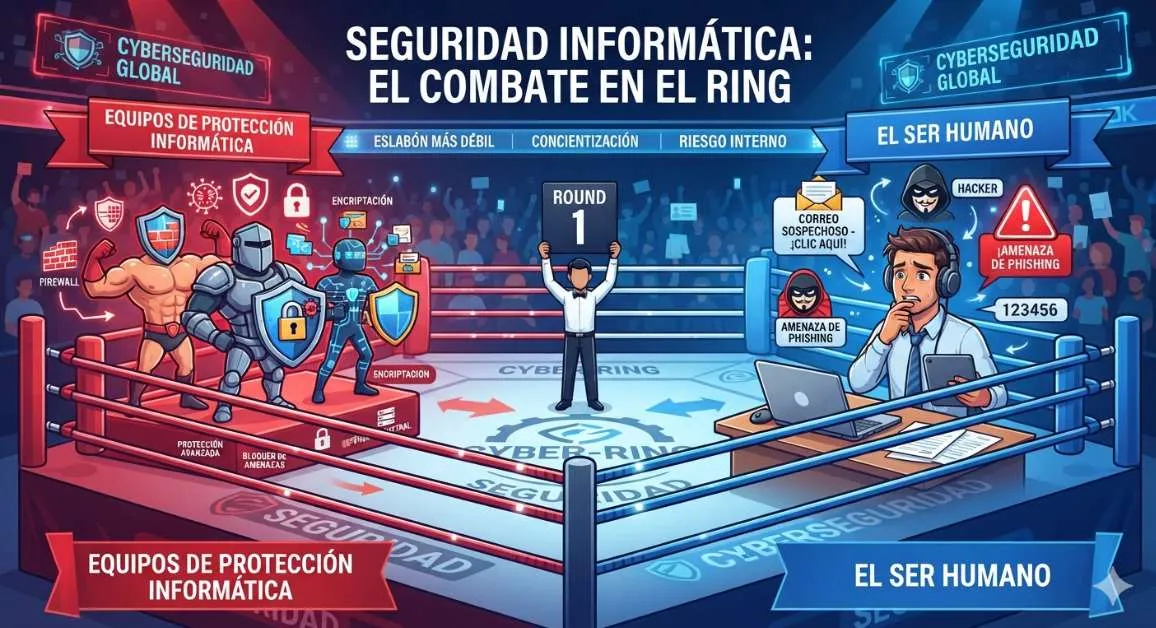
That is why technology must be constantly complemented with awareness programs and a security culture, ensuring that every team member becomes an active line of defense instead of an unintentional gap.
Thank you for your time joining us for this edition of Riesgo Zero. Through this space we aim to share practical tools to strengthen your organization's security culture, from the Zero Trust model to mitigating DDoS attacks and the various phishing vectors. Remember that security is everyone's responsibility: every action counts toward protecting data integrity and business continuity.
URL Pro Security Officer