Welcome to Riesgo Zero, the space where we learn to protect what makes us great. The adoption of Artificial Intelligence in the business environment is moving faster than regulatory frameworks and traditional cybersecurity defenses. In this edition we look at the impact of AI from the lens of corporate risk.
AI as a cross-cutting risk vector
Artificial Intelligence should not be seen only as a tool, but as a cross-cutting risk vector that alters the security profile of the entire company. AI shifts the risk focus from perimeter protection to data and logic protection. For effective management, companies need to move toward a "Responsible AI" model, where risk control does not limit innovation but defines the perimeters of safe use (acceptable-use policies).
What responsible AI is
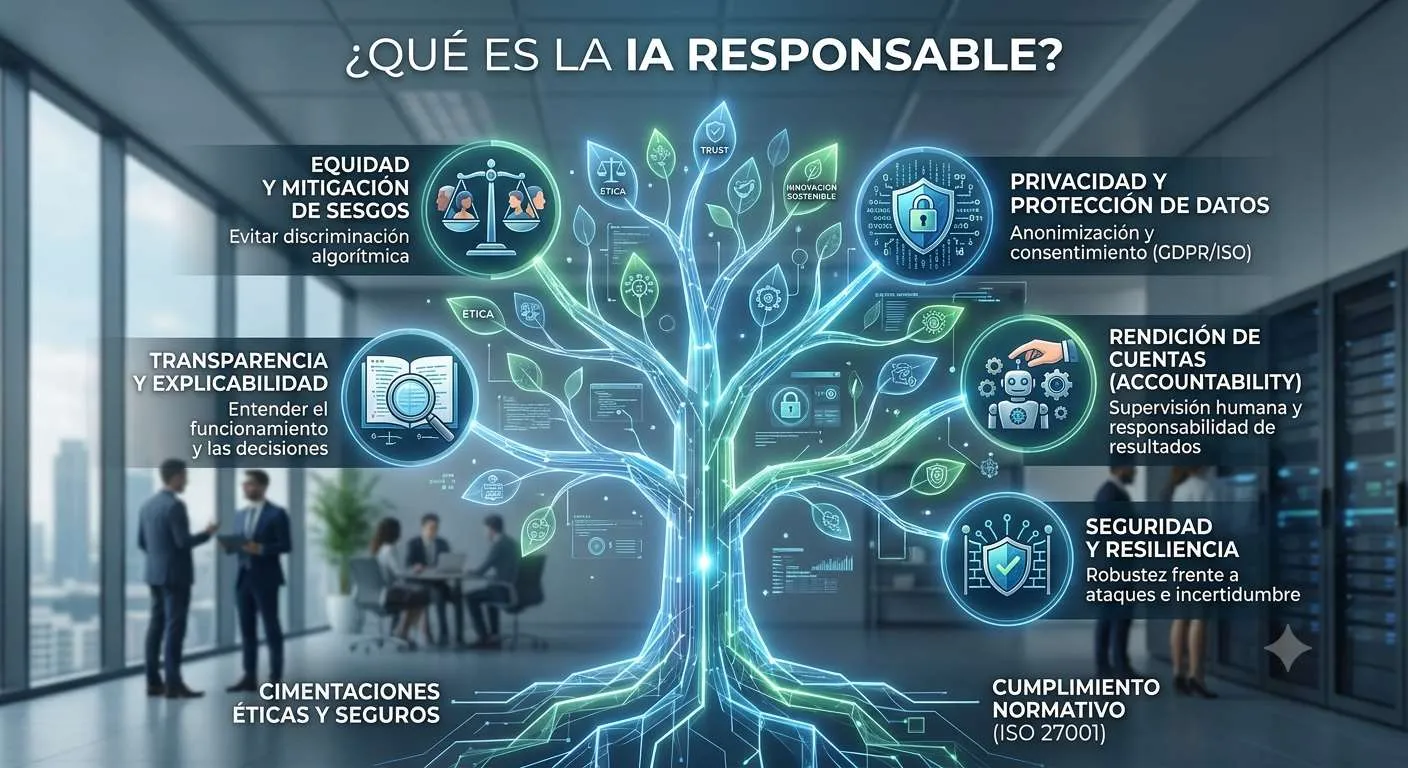
- Fairness and bias mitigation: avoiding algorithmic discrimination.
- Privacy and data protection: anonymization and consent (GDPR/ISO).
- Transparency and explainability: understanding how it works and how it decides.
- Accountability: human oversight and responsibility for outcomes.
- Security and resilience: robustness against attacks and uncertainty.
All of this rests on ethical, secure foundations, with regulatory compliance (ISO 27001) as its base.
Bias in AI
This is a systematic error where AI unfairly favors or harms certain groups of people, based on historical data. For example: if an AI that helps with hiring has seen for years that a company mostly hired men for leadership roles, it could wrongly learn that "being a man" is a requirement for success, and start automatically discarding résumés from women, even when they are equally or better qualified.
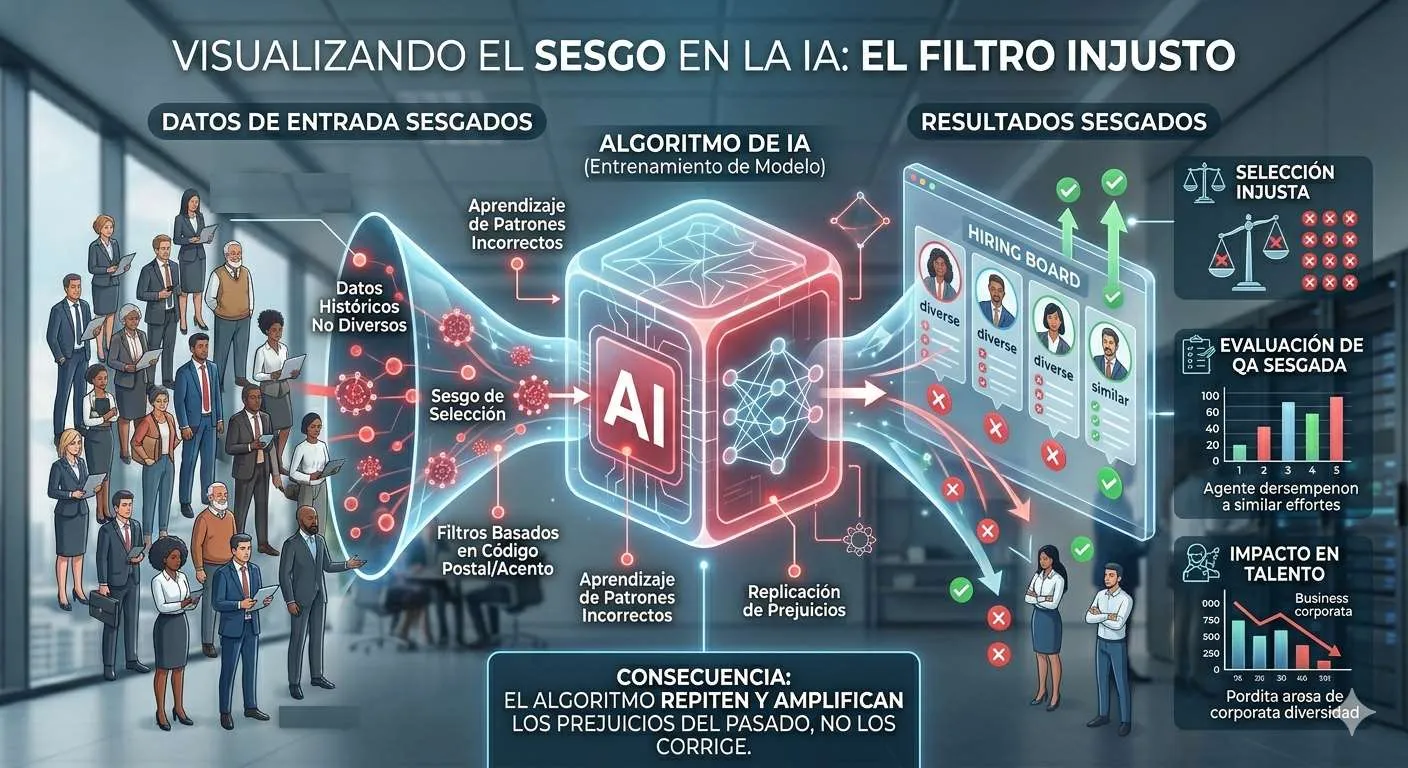
Biased input data — non-diverse historical data, selection bias, filters based on zip code or accent — feeds the AI algorithm, which learns incorrect patterns and replicates those prejudices. The result: unfair selection, biased performance reviews, and a direct impact on corporate talent diversity. The algorithm repeats and amplifies past prejudices; it does not correct them.
Uncontrolled use of generative AI in companies
Generative Artificial Intelligence is a branch of AI capable of creating new, original content — text, images, code, or audio — from learned patterns, making it possible to automate creative and analytical tasks that previously required exclusively human intervention.
Shadow AI is the use of Artificial Intelligence tools, apps, or services within a company without the knowledge, oversight, or formal approval of the IT or Information Security area. This happens when employees, looking to boost their productivity or speed up daily tasks, use generative AI platforms — chatbots, code generators, transcription tools — that have not been vetted by the company.

The risk: loss of confidentiality, integrity, and availability of corporate information, as well as possible regulatory non-compliance (Law 1581 on Personal Data Protection), resulting from entering confidential or sensitive information — customer data, intellectual property, source code — into unauthorized third-party generative AI models or models without proper privacy settings.
Thank you for joining us for this edition of Riesgo Zero. We hope this analysis of the impact of Artificial Intelligence from the lens of corporate risk gives you valuable tools to strengthen your operation's security. Commitment to proactive risk management is the first step toward turning the challenges of innovation into a safe, resilient competitive advantage.
URL Pro Security Officer