At URL Pro we believe people come first. Welcome to Riesgo Zero, the space where we promote a culture of prevention, resilience, and mutual care, always remembering that our integrity and that of our families come before any material asset. In this edition we look ahead to 2030: how the Information Security Management System (ISMS), risk management, and artificial intelligence are evolving, and what that change means for human life.
Technology and life: a circle that feeds itself
After 2020 we learned what resilience means. Today technology and life influence each other constantly: what decades ago looked like science fiction, such as ordering food from a phone, is part of our routine. Governing that relationship well is the great challenge of the coming years.
The evolution of security, risks, and AI through 2030
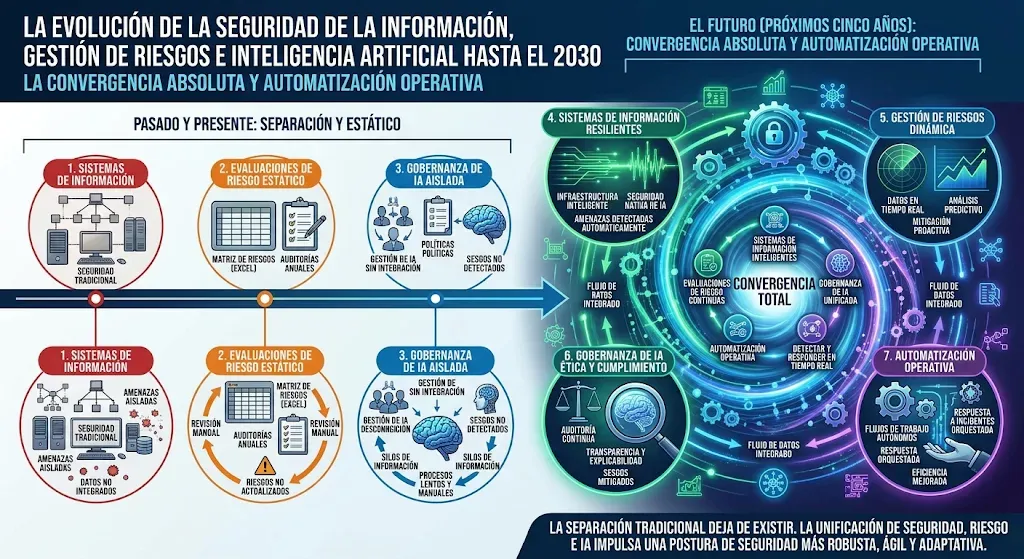
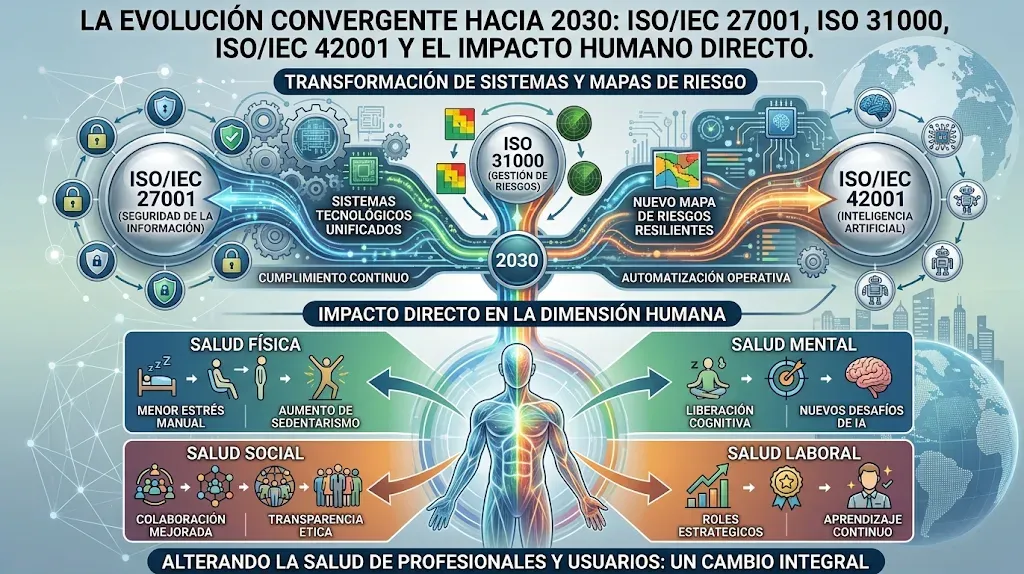
Until now, information security, risk assessment, and AI governance have lived apart and in a static way: systems with traditional security, risk matrices in spreadsheets with annual audits, and isolated AI governance. For the next five years, we expect absolute convergence and operational automation:
- Resilient information systems, with threats detected automatically.
- Dynamic risk management, with real-time data, predictive analytics, and proactive mitigation.
- Ethics and compliance governance, with continuous auditing, transparency, and explainability.
- Operational automation, with autonomous workflows and orchestrated incident response.
Unified governance: the ISO 27001, ISO 31000, and ISO/IEC 42001 trio
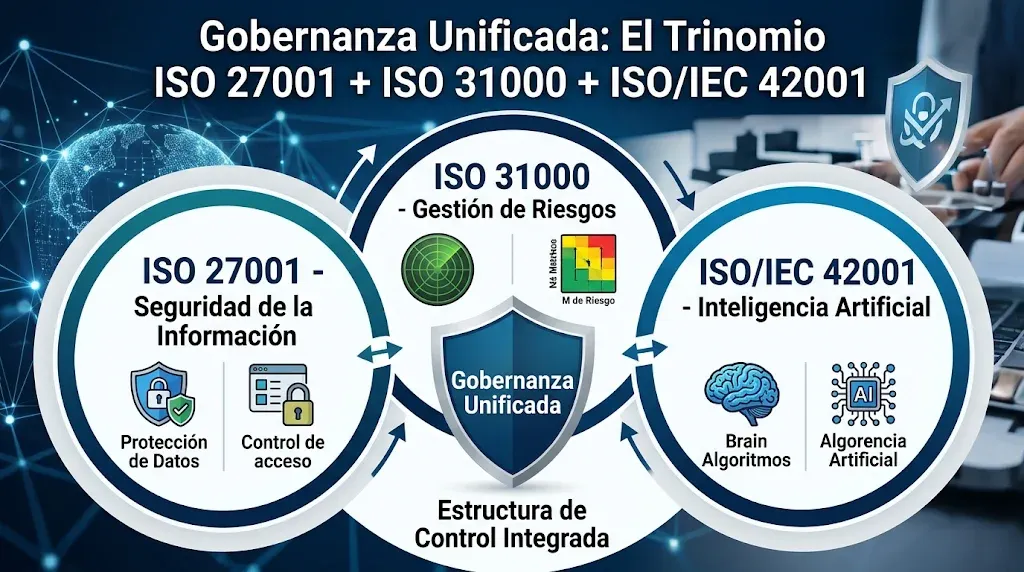
- ISO/IEC 27001: information security, with data protection and access control.
- ISO 31000: risk management.
- ISO/IEC 42001: artificial intelligence.
Together they form an integrated control structure. Alongside this trio comes the ISO amendment on climate change, which already applies to management system standards, and the AI standard carries more and more weight within that structure.
The traditional way of reviewing the risk matrix is obsolete
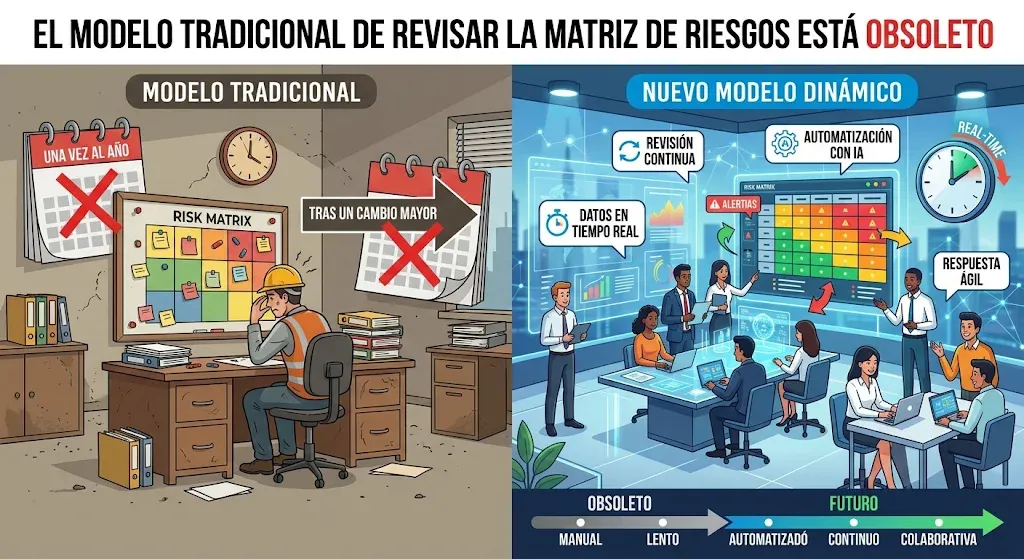
Reviewing the risk matrix once a year, or only after a major change, is no longer enough. The new model is dynamic: continuous review, real-time data, AI automation, alerts, and agile response. It moves from a manual, slow process to an automated, continuous, and collaborative one.
Non-human identity and least privilege in the age of AI
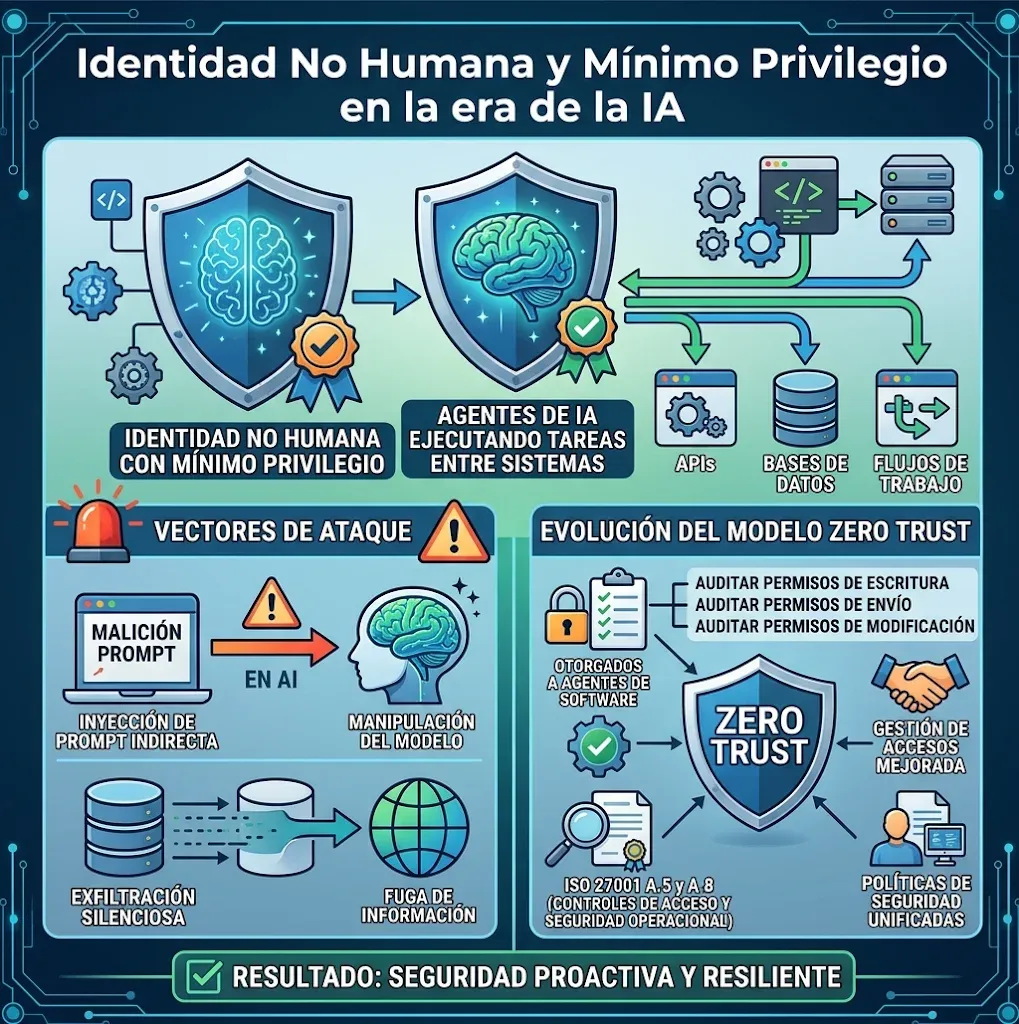
AI agents already run tasks across systems, APIs, databases, and workflows. That makes them non-human identities that must operate with least privilege. Among the most relevant attack vectors are:
- Indirect prompt injection, which aims to manipulate the model.
- Silent data exfiltration, which ends in information leaks.
The answer is an evolution of the Zero Trust model: auditing the write, send, and modify permissions granted to software agents, with improved access management and unified security policies, supported by controls A.5 and A.8 of ISO 27001 (access control and operational security). The result is proactive, resilient security.
Without governance, AI can't hold up
Artificial intelligence without governance has nothing to stand on: information security (ISO 27001) and AI (ISO 42001) need to converge with risk management (ISO 31000) so technology can move forward safely.
Toward 2030: the transformation has already begun
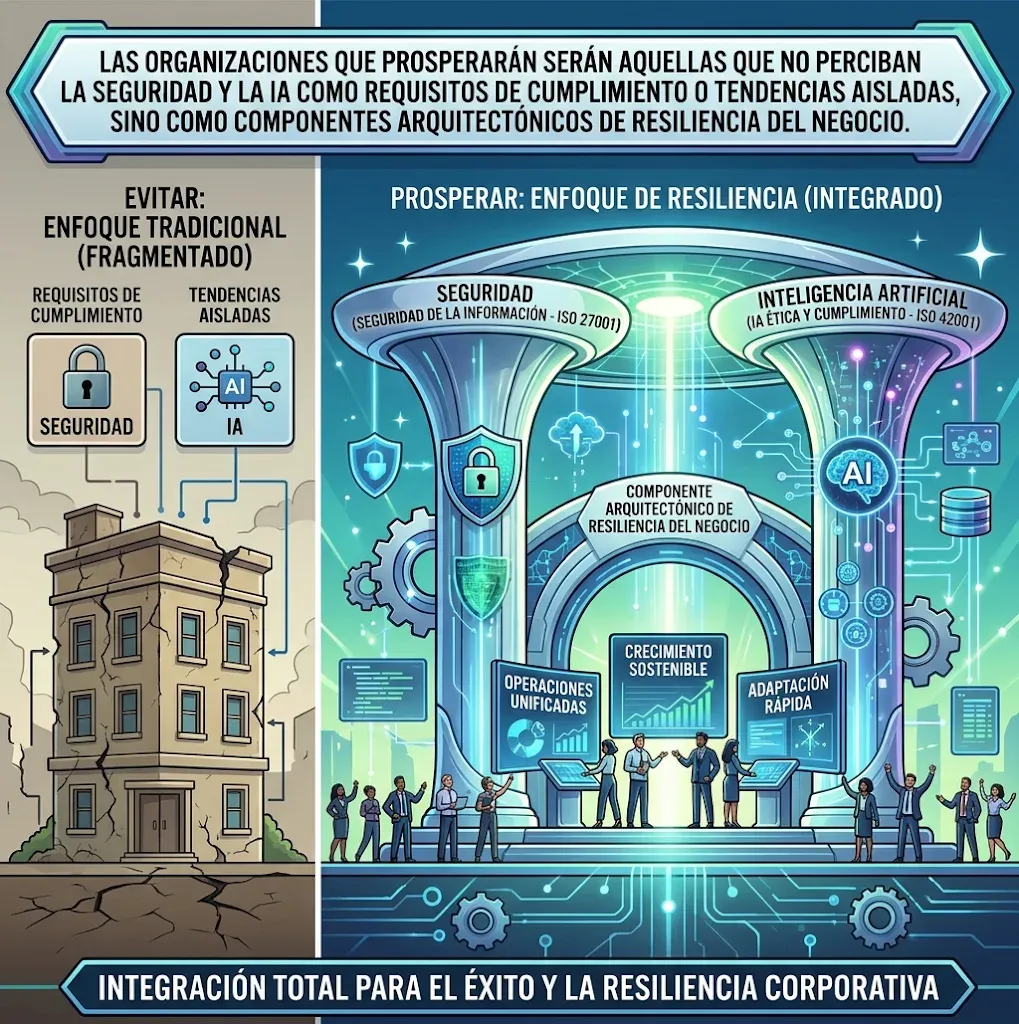
The leap is not from now to 2030: it happens from one year to the next. The organizations that will thrive are those that don't see security and AI as compliance requirements or isolated trends, but as architectural components of business resilience. Total integration is the key to corporate success and resilience.
Data, contingency, and human health
Data and contingency plans have always been at the center of information security. What is new is that there is now a third element we must protect with the same rigor: human health.
Summary of the impact on human beings through 2030
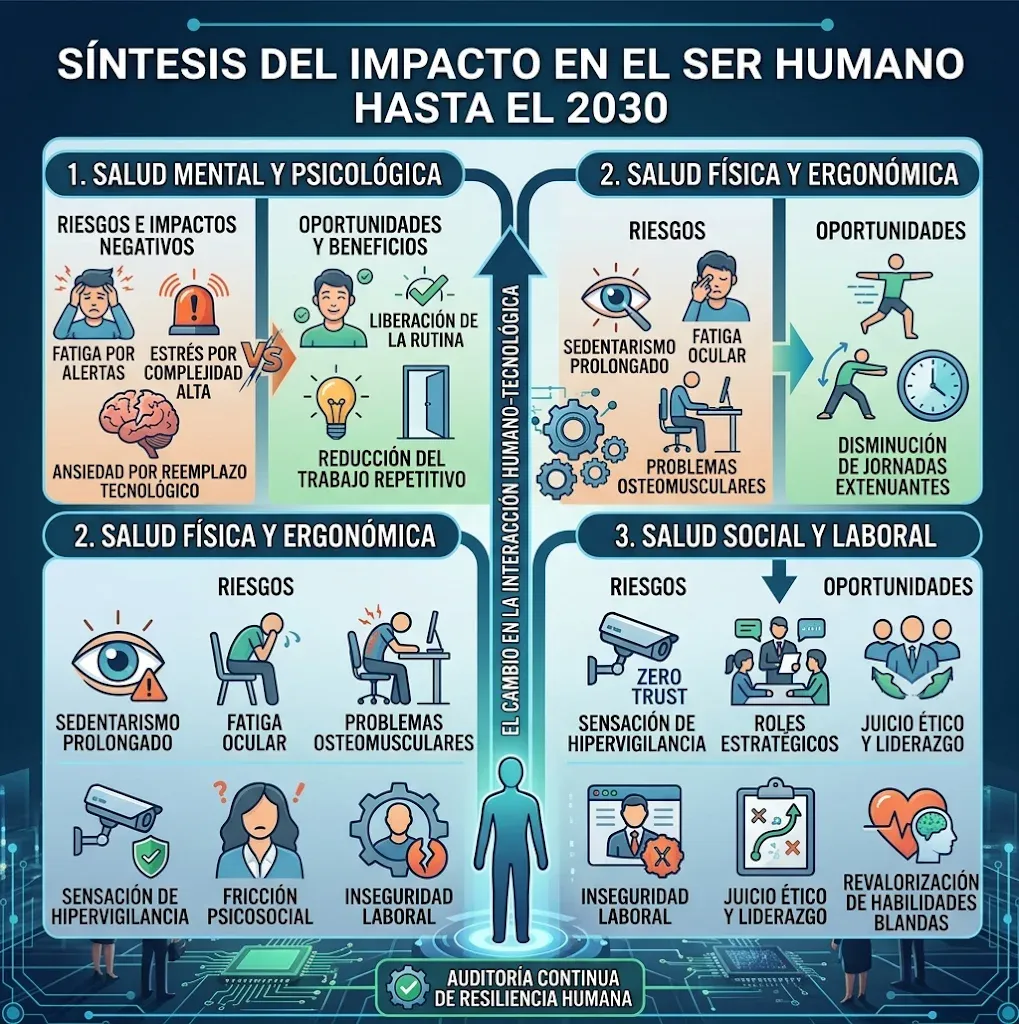
- Mental and psychological health: alert fatigue, stress from high complexity, and anxiety about technological replacement; versus freedom from routine and less repetitive work.
- Physical and ergonomic health: prolonged sedentary behavior, eye strain, and musculoskeletal problems; versus fewer exhausting workdays.
- Social and work health: a sense of hypervigilance, psychosocial friction, and job insecurity; versus strategic roles, ethical judgment and leadership, and renewed value for soft skills.
The conclusion is clear: the change in human-technology interaction demands continuous auditing of human resilience.
The scenario we must avoid
If technological convergence and AI advance without governance, the risk is reaching 2030 with a mental health crisis. Three factors combine:
- Algorithmic surveillance and overdemand.
- Hyperconnectivity and continuous technostress.
- Job obsolescence and dehumanization.
The possible outcome is major depression, chronic anxiety, and systemic burnout. The lack of cognitive rest and the pressure to respond at machine speed produce a cortisol and adrenaline overload that leads to burnout depression and operational post-traumatic stress syndromes.
The body shows it too. Digital aging and blue-light fatigue, the surge of cortisol and adrenaline, and sedentary behavior with its ergonomic microclimate alter the skin barrier and can trigger or worsen conditions such as seborrheic dermatitis, psoriasis, eczema, and acne.
Robotics is already on the market
Physical automation is advancing at the same pace as digital automation. Some examples already out there:
- Tesla Optimus 3, a humanoid robot.
- NEO, a household-task robot.
- Suzuki's transport robot dog.
Governing AI means protecting people

Governing artificial intelligence is not just about securing the technology, but about protecting and elevating the dignity, stability, and health of the human being who gives it meaning.
URL Pro Security Officer